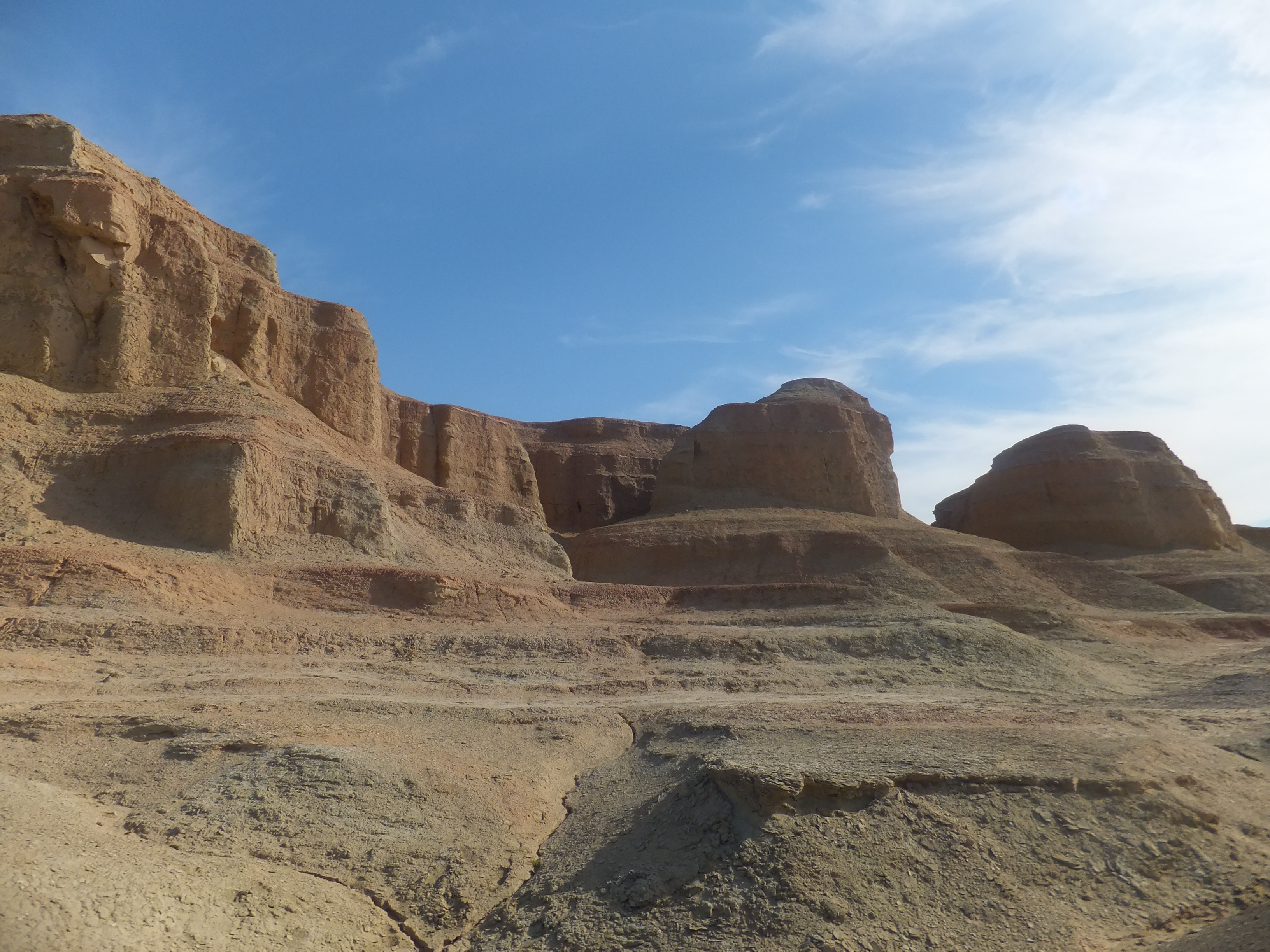
I leave you with scenes from my last day in Northern Xinjiang before heading south onto the Silk Road. Wu Cai Tan (五彩滩)- literally translating to ‘multicoloured beach’ is a brilliant example of Xinjiang’s Gobi landscape. What I had seen up to now had been lush forests and snow-capped mountains, but most of the province, is indeed a sea of endless sand dunes.


Clean energy is evident everywhere here – the gusty desert winds in this geography make wind power generating feasible and efficient. It is so good to see such advanced progress being made here in China’s most faraway province. My heart sings for the future :).

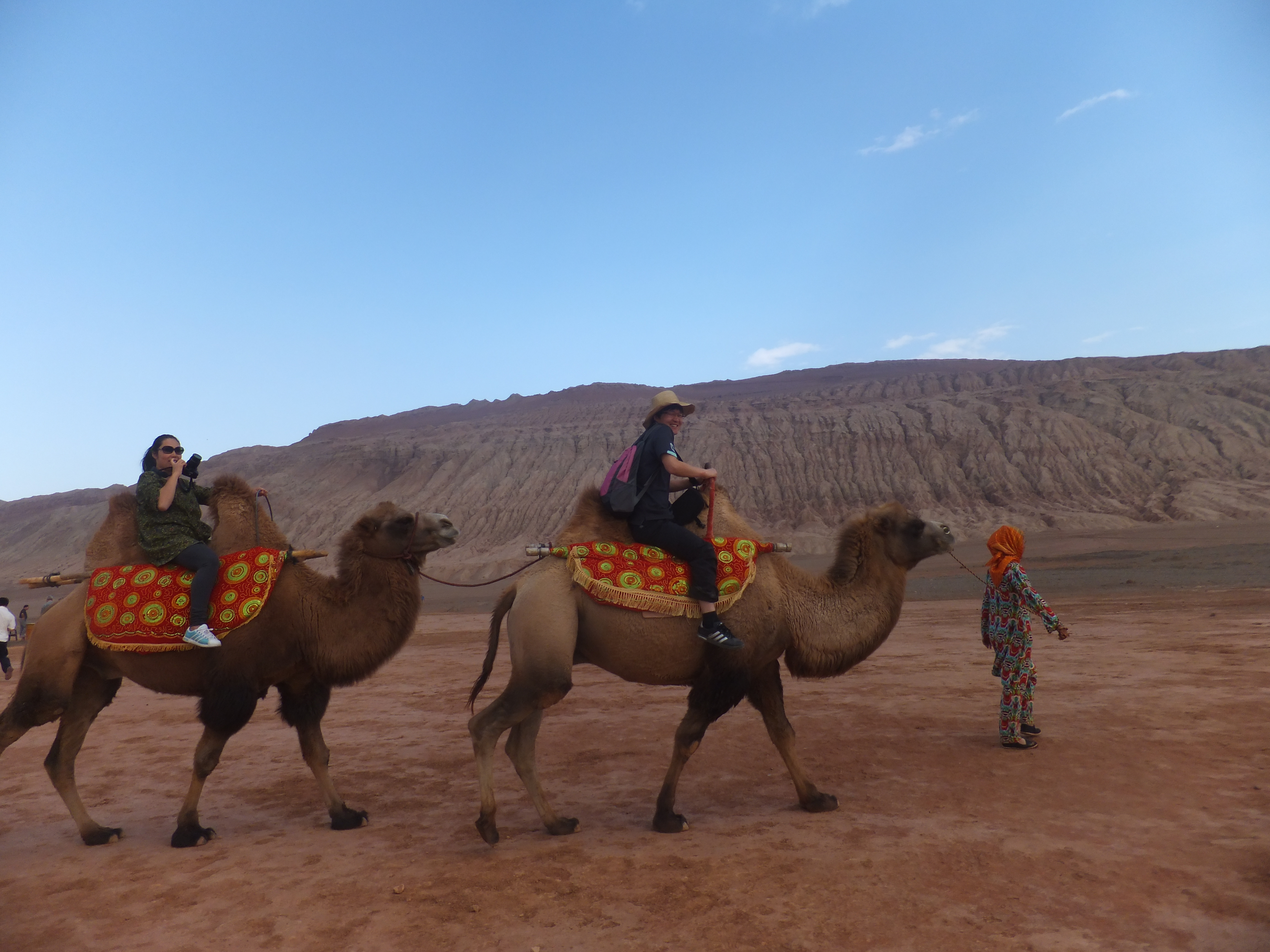
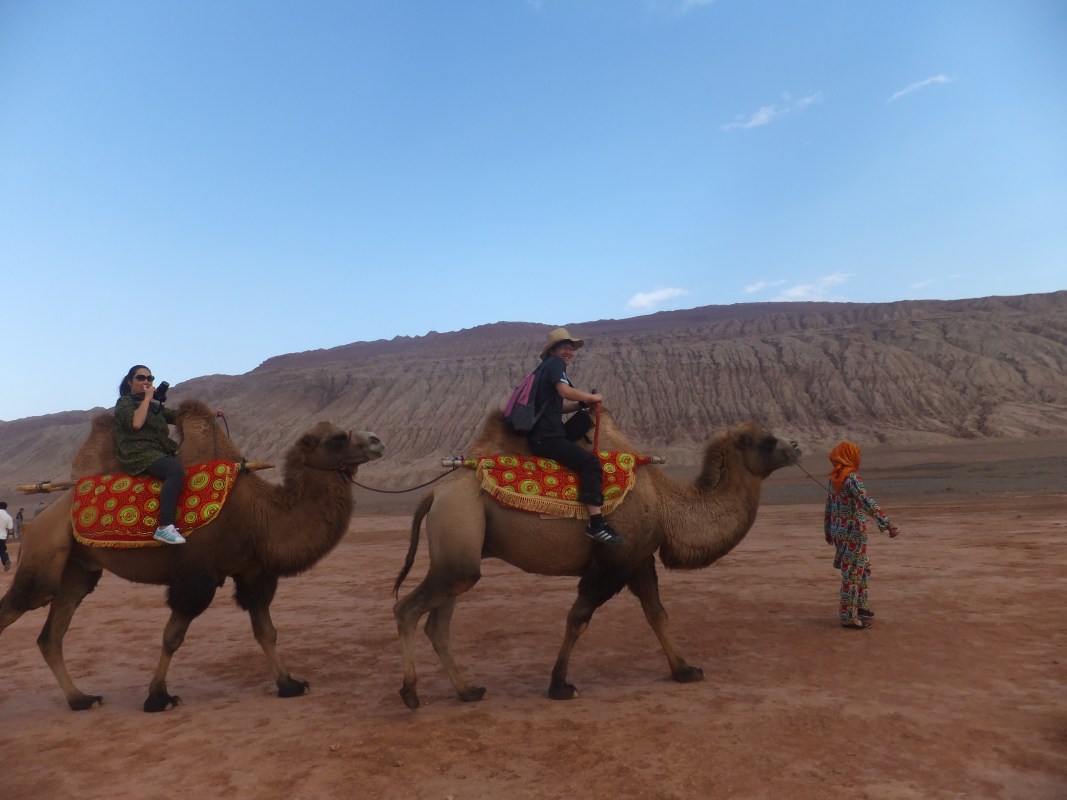
The merchant caravans are long gone, but the camels are still around. My friends paid 10 RMB for a ten minute ride. Not a bad deal I’d say.
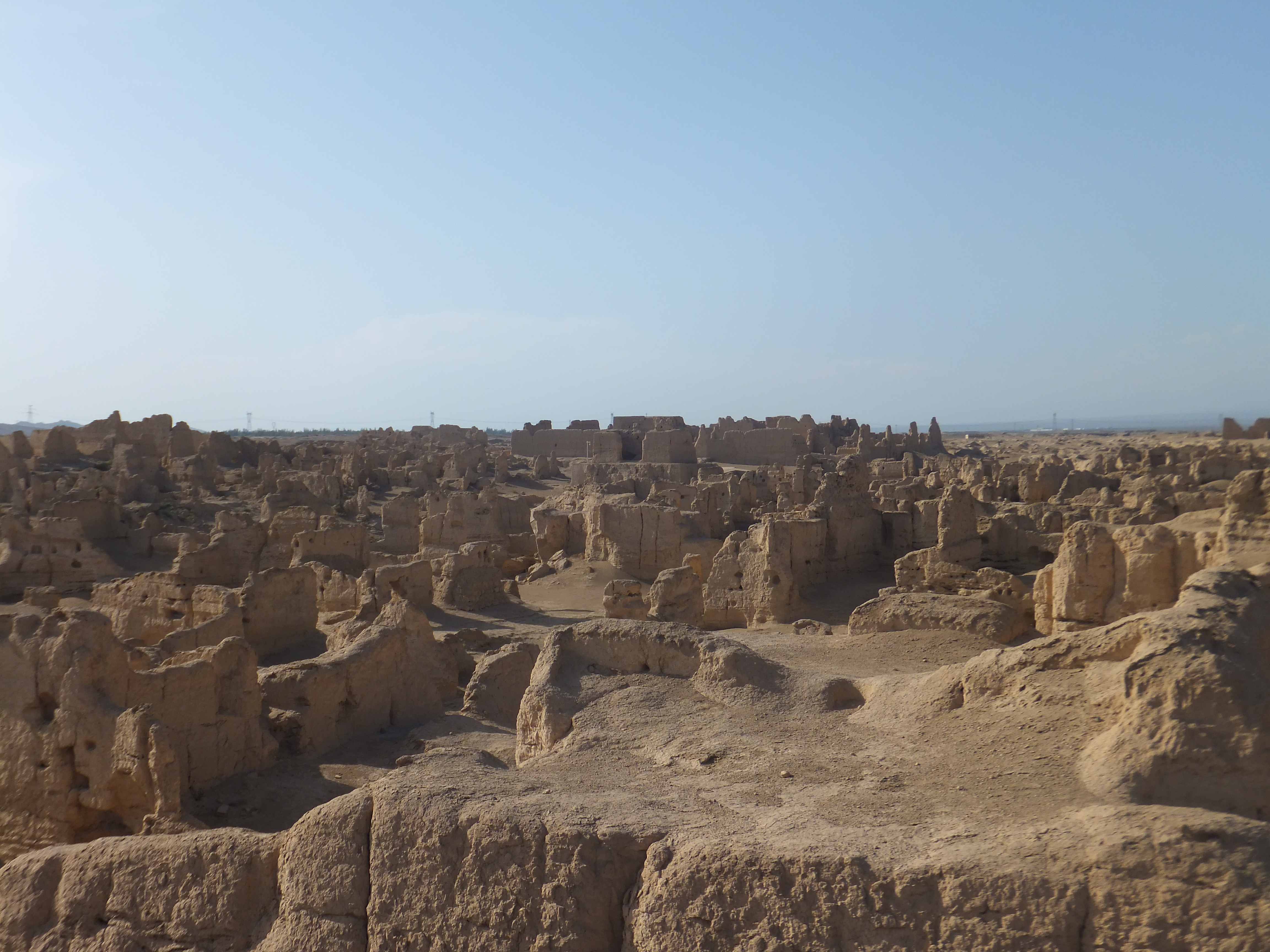

But it is the culture that makes Xinjiang irresistible. We visited the ruins of Jiaohe – one of the 36 ancient cities that existed in Xinjiang throughout history. Jiaohe was destroyed in 600AD, but its magnificant ruins still stand proudly in the scorching heat of Turpan. We know nearly nothing about the people who built this civilization, apart from a mention of its name in Tang dynasty tax documents on the Silk Road, but one cannot help but marvel at the tenacity and intelligence of these people – they built a home in one of the harshest environments in the world, where summer temperatures reach 45 C and winter temperatures dip below -40 C. There is no water, so they built the first general irrigation system in the world, with tunnels stretching over 1500 Km. Agriculture does not survive here, so they developed a specialisation for the one fruit that does – grapes. They are simply remarkable.
 Musings of a Leaf