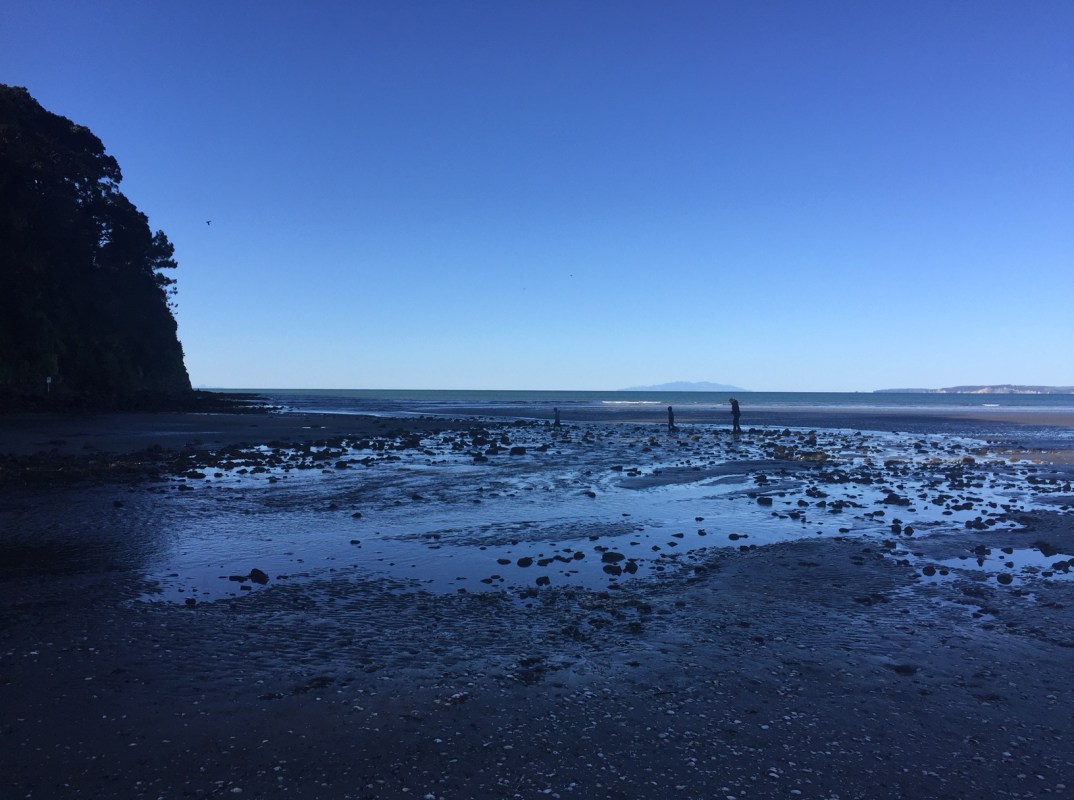
For as long as I can remember, my heroes have been men and women who travel across great distances with the effortlessness of Kazakh nomads. I revered Paul Salopek, a journalist who is walking across the world to retrace the migration of the first Homo Sapiens. I worshipped Robyn Davidson‘s epic 2,835km journey on camel back across the red earth of the Australian outback. But the greatest hero of all have been Sanmao, a woman who embraced the ferocity and fragility of free will. She followed her heart to Western Sahara and bestowed upon the world a collection of beautiful memoirs that still inspire new generations to run away to exotic lands.
Quietly, as they always do, my thoughts were changing.
“What is your favourite Maori concept?”
I once asked a friend this question at the tail end of a drawn out text message conversation covering everything from life aspirations and definitions of success. Weary from the big life questions, changing the subject felt like the right escape.
“Turangawaewae.” Came the reply.
Typing the unfamiliar arrangement of letters into Google, I was immediately captivated by its power.
Tūrangawaewae is one of the most well-known and powerful Māori concepts. Literally tūranga (standing place), waewae (feet), it is often translated as ‘a place to stand’. Tūrangawaewae are places where we feel especially empowered and connected. They are our foundation, our place in the world, our home.
The concept of a collective homeland is present across many cultures. Just as Maori trace their origins to the mythical Hawaiki in East Polynesia and the Jewish diaspora will always hold a special affinity for Israel, humans are particularly fond of tracing our roots to a special place. We are children of the land, born and bred on its earth and water. An old Chinese saying goes the water and earth of one place breeds special characteristics in its people. It is why uprooting ourselves and building life in new lands always prove to be an emotional, and sometimes traumatic, experience.
But tūrangawaewae seems to suggest a personal homeland – a place where you can plant your own feet firmly on the ground. It can be your ancestry, but also your here and now. It is a comforting thought to a global nomad. Perhaps it is when one is in constant motion that the need for spiritual permanence becomes necessary. I do not yet know where it is for me, but nevertheless embrace the notion that such a place awaits and that one day, even fleetingly, I may feel the beautiful yet elusive emotion of belonging.
 Musings of a Leaf
Thanks for the good read! I remember during uni, I found it interesting that no one called their room in their hall of residence or even their flat “home”, other than me. For me, I think the place wherever I’m living at the time becomes my “personal homeland” because it’s where I can relax in peace, and explore my own thoughts and feelings. So maybe my homeland is really within my heart, like the cliched saying: “home is where the heart is”. Cheesy, but true for me haha.